What Size Dumpster Do I Need? Dothan Roll-Off Guide
A straight-talking guide to picking between a 10, 15, 20 or 30 yard roll-off in Dothan, with real dimensions, weight limits and worked job examples.
ReadDothan, AL guide
An honest Wiregrass operator's guide to where your load really goes, why weight sets the price, and the correct destination for everything a dumpster can't take.
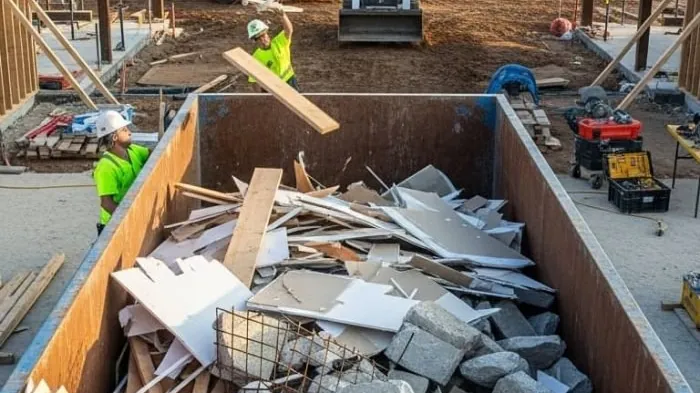
People ask me all the time what happens to their stuff after the truck pulls out of the driveway. Most folks picture a hole in the ground and leave it there. The real answer is more interesting, and understanding it is worth actual money to you, because every dollar on a roll-off invoice traces back to what happens in the twenty minutes after the container leaves your property.
Short version: we hook the box, run it to a permitted facility, and the truck rolls across a scale. Loaded weight in, empty weight out, and the difference is your tonnage. That number, not the container size, is what the facility bills us. Then the load gets tipped on a working face or sorting pad, a spotter eyeballs it for anything that shouldn't be there, and a dozer pushes it into the pile. A propane cylinder or a bucket of solvent gets found right there — and that's where extra charges start.
This comes out of making that run week after week around Dothan, out US-84 and US-231, into Henry, Dale, Coffee and Geneva counties. I won't publish facility hours or fee schedules here, because those change — call the City of Dothan's solid waste department or your county's convenience centre for current details. What I can give you is the logic underneath, which doesn't change.
This is the single fact that explains most of what a dumpster costs. A landfill's capacity is measured in airspace, but its costs, its permits and its liabilities scale with mass. So facilities charge by the ton. A 20-yard box filled to the rails with couches, boxes and old carpet might weigh two tons. The same 20-yard box half full of wet drywall, dirt and shingles can hit six.
That's why a flat-rate rental includes a tonnage allowance, and why the cheapest quote on the phone isn't always the cheapest invoice. We build our Dothan pricing around a realistic allowance for the job you describe.
Weight also explains the container advice. For dense material we push people toward a 10-yard box even when they've got room for a bigger one. You'll hit legal axle weight long before you fill a 30. A half-loaded small can isn't us being stingy — it's physics and DOT limits.
The gap between the cheap destination and the expensive one is wide. Broadly, four streams move through the Wiregrass.
Municipal solid waste is household trash — bagged garbage, furniture, clothing, mixed junk. It goes to a lined landfill, the most heavily engineered and generally the priciest per ton.
Construction and demolition debris is wood, drywall, roofing, siding, flooring. No putrescible garbage, so it goes to a C&D facility permitted under different rules and usually tips cheaper. That's the whole argument for keeping a jobsite container clean.
Green waste — limbs, brush, leaves, stumps — can be ground into mulch or compost feedstock instead of buried, if it arrives clean.
Recoverable commodities have a market price: steel, aluminium, copper, clean concrete. That's not waste. It's inventory sitting in the wrong container.
Mix them and everything travels at the price of the worst thing in the box. One bag of kitchen garbage in a clean C&D load reclassifies the whole load. That's not a rule I made up; it's how the receiving facility protects its permit.
| Material | Where it should go | Notes |
|---|---|---|
| Mixed household junk | Roll-off to MSW landfill, or curbside for small volumes | Highest tip rate per ton. Donate or sell first. |
| Clean wood, drywall, siding, roofing | Roll-off to a C&D facility | Keep garbage and liquids out and the load stays cheap. |
| Scrap steel, aluminium, copper, wire | Licensed scrap yard | They pay you. Pull it before the box arrives. |
| Appliances without refrigerant | Scrap metal recycler | Washers, dryers, ranges, water heaters all have value. |
| Fridges, freezers, window AC units | Certified refrigerant recovery, then scrap | EPA rules require recovery by a certified tech first. |
| Concrete, brick, block, asphalt | Clean fill site or crushing operation | Must be clean — no rebar ends, dirt, wood or trash mixed in. |
| Limbs, brush, leaves, stumps | Green waste or mulching facility | Only if the load is 100% vegetative. |
| Paint, solvents, pesticides, pool chemicals | Household hazardous waste collection | Never in any dumpster. Confirm dates with the city or county. |
| Motor oil, antifreeze, filters | Oil-collection point or licensed handler | Common on Wiregrass farms and shops. Keep it contained. |
| Tyres, batteries, propane cylinders | Tyre dealer, parts store, propane exchange | Banned outright from landfill disposal. |
| Electronics and CRT televisions | Licensed e-waste recycler | Old tube TVs carry leaded glass and often cost money to retire. |
| Suspected asbestos materials | Licensed abatement contractor only | Older in-town Dothan homes: assume, test, don't guess. |
I'll be honest with you, because plenty of companies aren't. Once your material is compacted in a container with everything else, the realistic recovery is metal and clean concrete. Facilities pull ferrous and non-ferrous scrap because a magnet and a market make it worth doing. Rubble gets separated because crushing it beats burying it.
Everything else — cardboard under wet drywall mud, bottles buried in insulation, paper rained on for a week in an Alabama July — is contaminated past the point anyone will pay to process it. Sorting after the fact costs more than the commodity is worth.
So the only recycling that reliably happens is the recycling that happens in your driveway, before the load moves. Everything after that is hope.
Scrap metal is the easiest money on any project. Water heaters, ductwork, old fencing, a cast iron tub, copper pipe from a bathroom gut. A licensed yard weighs it and pays you, and you've just pulled the heaviest items out of a load you'd be burying by the ton. On a full estate cleanout I've seen that cover a real slice of the rental.
Concrete, brick and asphalt work differently. Clean rubble is feedstock — crushed into base material for driveways and pads. But "clean" is strict: no dirt clods, no wood forms, no trash, and no rebar tails hanging out. Because of weight limits this material moves in a small dedicated can, which is exactly what our heavy debris service is set up for. Never mix rubble into a general load. You'll blow the weight allowance and lose a recovery route in one move.
Storm debris costs the Wiregrass most. After a hurricane band or tornado track, the loads I see are limbs plus fence panels plus soaked insulation plus a grill, all in one pile. A clean vegetative load has cheap destinations; add one section of vinyl fence and it's mixed debris at a higher rate. Book a dedicated green waste container and keep structural material in a second box.
Some materials are banned because they're dangerous to the crew, and some because they're regulated by ADEM and the EPA. Paint and solvents, motor oil and antifreeze, pesticides and herbicides, lead-acid and lithium batteries, tyres, propane cylinders, medical sharps, unused medication, refrigerant-bearing appliances, electronics, and anything you suspect contains asbestos. Our full prohibited items list goes deeper.
Two local specifics. Out on peanut and cotton ground, empty pesticide jugs are a real stream — triple-rinsed or pressure-rinsed at time of use, caps off, they're accepted by agricultural container recycling programmes running through farm co-ops and extension channels. Un-rinsed, they're hazardous waste. Used oil from shop and tractor work has collection routes too, as long as it isn't contaminated with antifreeze or fuel.
And lithium batteries — drill packs, e-bike packs, vape pens. Crushed in a truck body they start fires, and they do it regularly. Retail drop-off, every time. On asbestos: plenty of older Dothan homes have popcorn ceilings, floor tile mastic, pipe wrap or siding from that era. Test before disturbing. If it's positive, a licensed abatement contractor handles it under ADEM notification rules, not a roll-off. See ADEM and the EPA for the regulatory side.
Three tools, three jobs. City curbside handles routine household volumes and, in most service areas, limited bulky items and yard trimmings on a schedule. County convenience centres and transfer stations serve rural households and small self-haul loads — if it fits in a pickup and you've got a free Saturday, that's often cheapest.
A roll-off wins when volume is concentrated in time: a roof tear-off, a kitchen gut, a hoarding cleanout, a barn that came down in a storm. Twenty pickup trips at an hour each isn't cheaper than one container — you're just paying in fuel, tyres and weekends. We run boxes across the whole service area, from Rehoboth and Taylor to Ashford, Headland, Abbeville, Ozark and Slocomb, and I'd rather tell you a convenience site is the better call than sell you a box you don't need.
None of this is complicated. It's the difference between a load that goes down the road at the right price and one that gets flagged at the gate. For a straight read on which container and allowance fits your project — or an honest "you don't need us for that" — call Joey at (334) 336-0388. We're locally owned, licensed and insured, and every load we haul goes to a properly permitted facility. Have a look at our roll-off options or read the construction debris guide if you're planning a build.
Talk to a real person
Call and describe the job. Flat price, stated tonnage, and a delivery time on the same call.
Mon–Sat 7:00am – 6:00pm · Sun by appointment
From this guide
Because the landfill bills us by the ton at the scale house, not by the cubic yard. Your rental includes a tonnage allowance, and anything over it is passed through. A 20-yard box of household junk might weigh two tons; the same box holding wet drywall, dirt or shingles can hit six. That gap is why dense material belongs in a smaller dedicated container.
Realistically, metal and clean concrete. Facilities pull ferrous and non-ferrous scrap with magnets because there's a market for it, and rubble gets crushed into base material. Cardboard, plastic and paper buried in a compacted mixed load are too contaminated for anyone to process economically. The recycling that reliably happens is the sorting you do in your driveway before the load moves.
None of it goes in a dumpster. Paint and solvents go to household hazardous waste collection through the City of Dothan's solid waste department or your county. Used oil and antifreeze have licensed collection routes; keep them uncontaminated. Empty pesticide jugs triple-rinsed or pressure-rinsed at time of use, caps off, are accepted by agricultural container recycling programmes. Confirm current details locally.
You can, but it costs you. A load that is one hundred percent limbs, brush and leaves qualifies as green waste and has cheaper destinations, including grinding into mulch or boiler fuel. Add one fence panel or a roll of soaked insulation and the whole load reclassifies as mixed debris at a higher rate. After storms, book two containers and keep them separate.
Curbside handles routine household volumes on a schedule. County convenience centres and transfer stations suit small self-haul loads you can fit in a pickup. A roll-off wins when a lot of material appears at once, like a roof tear-off, a kitchen gut or a full cleanout. Twenty pickup trips cost more in fuel and weekends than one container.
Keep reading
A straight-talking guide to picking between a 10, 15, 20 or 30 yard roll-off in Dothan, with real dimensions, weight limits and worked job examples.
ReadAn operator's honest breakdown of dumpster pricing in Dothan: what a flat rate should include, which add-on fees to question, and how to pay less.
ReadA straight answer from a Dothan roll-off operator: exactly what goes in an Alabama dumpster, what never does, why, and where to take the rest.
Read