Dumpster Permit in Dothan, AL: Do You Need One? Guide
Whether you need a permit for a dumpster in Dothan comes down to where the container sits. The driveway-versus-street rule, plus HOA and county considerations.
ReadDothan, AL guide
A straight answer from a Dothan roll-off operator: exactly what goes in an Alabama dumpster, what never does, why, and where to take the rest.
Ten years of hauling roll-offs around the Wiregrass and I can tell you the single biggest cause of a bad rental day isn't the size of the box or where it sits in the driveway. It's one five-gallon bucket of old deck stain riding on top of a load of drywall. That bucket turns a routine haul into a rejected load, a return trip, and a bill nobody planned on. The landfill scale house does not care that it was an honest mistake.
Here's the thing most folks never hear: a roll-off dumpster is not a garbage can. It's a container headed for a permitted construction-and-demolition or municipal solid waste facility, and those facilities operate under rules set by the Alabama Department of Environmental Management. What we can accept is defined by what the receiving facility will take, not by what fits. That's why the list looks arbitrary from the outside. A refrigerator is fine once a certified tech pulls the refrigerant; the same fridge untouched is a violation.
This guide is the plain version of that rulebook, written for Dothan, Headland, Ashford, Cowarts and every other town we run to. Sort your pile before we drop the box and you'll never see a contamination charge from us. If you're unsure about something, call before you throw it in. That call costs you nothing. Fishing a propane tank out of a full 30-yarder at the scale house costs everybody.
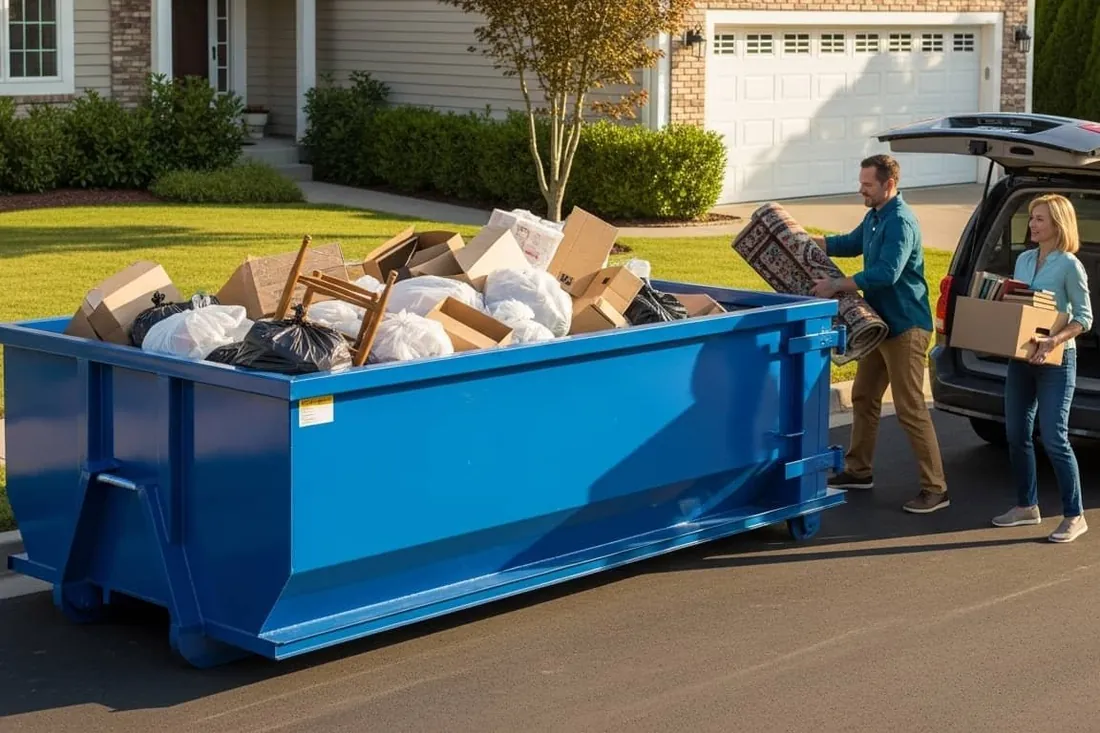
Couches, recliners, dining sets, bed frames, dressers, box springs, carpet and pad, clothing, toys, books, boxes, kitchenware, bagged household trash. Basically the contents of a house minus the chemicals in the garage and under the sink. If you're clearing a relative's home in Napier Field or Madrid, our estate cleanout service handles the sorting alongside you.
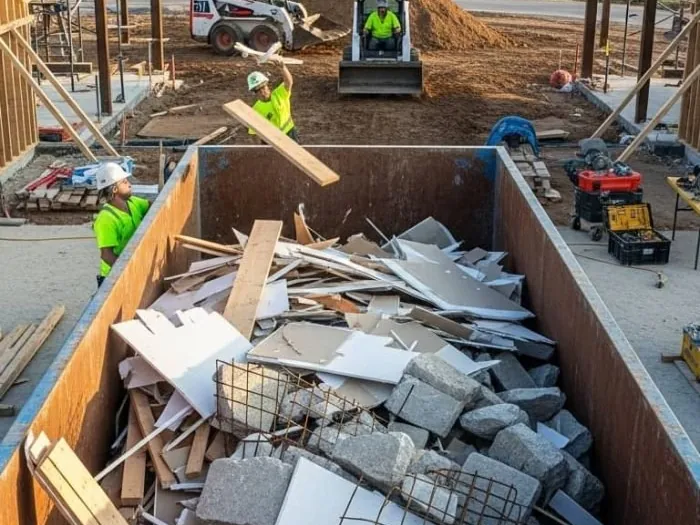
Dimensional lumber, plywood and OSB, drywall and joint compound, insulation, trim and moulding, doors, windows, cabinetry and countertops, subfloor, vinyl plank, laminate, hardwood, ceramic tile, siding, fencing, and framing lumber with nails still in it. Kitchen and bath remodels are the bread and butter of our construction dumpster rentals, and full teardowns ride in the same kind of box.
Three-tab and architectural asphalt shingles, felt, ridge cap, and the nails that come with them. Shingles are heavy — a Dothan ranch tear-off runs 250 to 400 pounds per square — so it almost always wants a dedicated roofing dumpster rather than a mixed box, sized on weight rather than volume.
Limbs, brush, palm and shrub trimmings, leaves, pine straw, grass, stumps under about 18 inches, and storm debris. After a line of thunderstorms or the tail end of a Gulf system comes through Houston County, this is most of what we haul. Keep it separate from household trash where you can — clean green waste often takes a cheaper disposal route. See yard waste and storm debris removal.
Water heaters, stoves, washers, dryers, dishwashers, metal shelving, bed frames, gutters, well pipe, tin roofing, and general farm scrap. All fine. The only appliances that give us trouble are the ones with a sealed refrigerant circuit — refrigerators, freezers, window and mini-split AC units, dehumidifiers, and wine coolers.
Nothing on this list is a preference. Each item is banned because of a specific hazard at the truck, the container, or the landfill face.
| Material | Goes in the box? | Why / what to do instead |
|---|---|---|
| Furniture, household junk, carpet | Yes | Standard municipal waste |
| Lumber, drywall, cabinets, flooring, siding | Yes | Standard C&D debris |
| Asphalt shingles | Yes | Heavy — size the box for weight, not volume |
| Brush, limbs, leaves, storm debris | Yes | Keep clean for cheaper green-waste disposal |
| Scrap metal, water heaters, stoves, washers | Yes | No sealed refrigerant circuit |
| Wet paint, stain, solvents, thinner | No | Liquid hazardous waste; leaks in transit. Dry it out fully or use household hazardous waste collection |
| Motor oil, gas, antifreeze, transmission fluid | No | Free recycling at most auto parts stores and quick lubes |
| Batteries (car, lithium, rechargeable) | No | Fire risk — lithium cells ignite when crushed in the compactor |
| Pesticides, herbicides, farm chemicals | No | Regulated ag chemicals; use a chemical container recycling or HHW event |
| Tires | No | Banned from Alabama landfills; they float back up through cover. Tire retailers take them for a small fee |
| Propane tanks, cylinders, aerosols, compressed gas | No | Sealed pressure vessels explode under a loader or in a truck fire |
| Medical and biohazard waste, sharps | No | Requires licensed medical waste handling |
| Asbestos-containing material | No | Licensed abatement contractor only — never break it up yourself |
| Fridges, freezers, AC units, dehumidifiers | No | Refrigerant must be recovered and certified by a technician first |
| TVs, monitors, CRTs, computers | No | Lead and mercury; use an e-waste recycler |
| Hot ashes, coals, fireworks | No | Smoulders for days and has set boxes on fire. Cold and wet only |
| Railroad ties, creosote and CCA-treated timbers | No | Creosote is a regulated wood preservative; most landfills reject it outright |
| Liquids of any kind, sludge, septic waste | No | No free liquids allowed at the landfill face, period |
| Mattresses, box springs | Call first | Often accepted with a per-item fee |
| Dirt, sod, concrete, brick, red clay, asphalt | Call first | Needs a dedicated heavy-debris box |
A word on the two that matter most around here. Farm chemicals are a real issue in peanut and cotton country — an old shed cleanout out toward Webb or Slocomb turns up half-empty jugs of herbicide more often than you'd think. Those never go in a dumpster. Set them aside and use an agricultural container recycling program or a household hazardous waste collection day. The Alabama Department of Environmental Management's waste division is the right starting point for current disposal options.
Asbestos deserves its own paragraph. Plenty of in-town Dothan homes built before 1980 have plaster-and-lath walls, 9x9 floor tile, black mastic, wrapped duct insulation, or transite siding — all classic asbestos-era materials. If you suspect it, stop. Do not sand it, saw it, or pitch it in the box. Have it tested, and if it comes back positive, hire a licensed abatement contractor who will contain and manifest it properly. The EPA's asbestos guidance explains why intact material left alone is far safer than material somebody broke up on a Saturday. Undisturbed, it's usually harmless. Airborne, it isn't.
Mattresses and box springs are usually fine with a per-item disposal fee. Treated lumber depends on the type — modern pressure-treated deck boards typically go through, creosote railroad ties do not. Large appliances are yes or no purely on refrigerant. And heavy inert material is the one that surprises people most: dirt, sod, red clay, concrete slab, brick, block, and asphalt are all disposable, but they cannot ride in a mixed load. A 20-yard box of clay runs roughly 25 tons — far past what a roll-off truck can legally haul. That work goes in a low-sided concrete and heavy debris box, usually a 10-yard, filled maybe halfway.
Best case, our driver spots it in the driveway before he hooks the box. He'll knock on the door, you pull the item, he loads and leaves. No harm done.
If it isn't caught until the scale house, it gets expensive fast. The facility can reject the entire load, which means the box comes back to your address full and you pay a dry-run charge for a haul that accomplished nothing. If they accept the load but flag contamination, that's a per-item or per-ton surcharge passed straight through. With genuine hazardous material the container can be quarantined, and the cost climbs fast. In ten years I've had to return exactly three loaded boxes to a customer. All three were avoidable with one question asked up front.
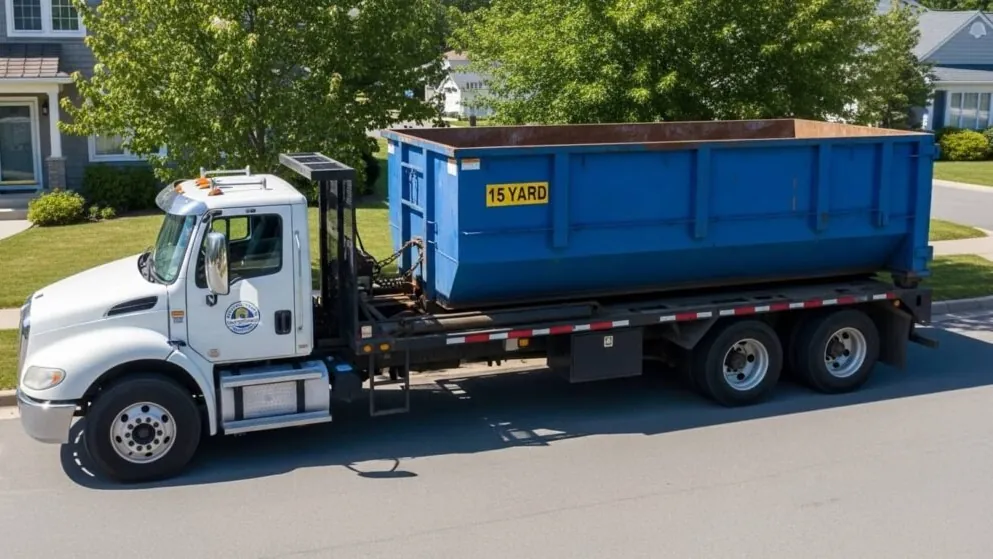
Set two five-gallon buckets and a tarp corner aside before you start, one bucket for chemicals and one for batteries and small electronics. Everything questionable lands there instead of in the box. Break down cardboard and furniture so you're filling volume, not spanning it. Load heavy material — shingles, tile, plaster — flat across the floor of the container first, then bulky light material on top. Keep everything below the top rail — we can't legally tarp and haul a heaped box, and a Dothan summer downpour adds weight by the hour. If you're mixing categories, our roll-off rental page covers which combinations we can take in one box.
Nothing on the no list is undisposable — it just needs a different door. Used motor oil and antifreeze: auto parts stores along Ross Clark Circle and most quick-lube shops take them free. Tires: the retailer who sells you the replacements will take the old ones for a small per-tire fee. Car batteries: any parts store, usually with a core credit. Propane cylinders: exchange cages at hardware stores and fuel dealers. Electronics and CRT televisions: watch for county e-waste collection events, which run periodically in Houston County. Paint: dry latex solid with hardener or cat litter, lid off, then bin it — oil-based needs a household hazardous waste channel. Refrigerators and AC units: a licensed HVAC tech recovers the refrigerant and tags the unit, and the shell is then just scrap metal we'll take. We keep the current local specifics in our Dothan recycling and disposal guide.
Big Joey's is locally owned, licensed and insured, and we run flat-rate pricing with same-day or next-day delivery across Dothan, Rehoboth, Taylor, Kinsey, Cowarts, Ashford, Headland, Enterprise, Ozark and the rest of the Wiregrass service area. Tell us what's in the pile and we'll tell you straight whether it goes in the box and which size fits — no surprise charges at the scale house. Call Joey at (334) 336-0388, or see our contact page for hours and directions to the yard on E Southport.
Talk to a real person
Call and describe the job. Flat price, stated tonnage, and a delivery time on the same call.
Mon–Sat 7:00am – 6:00pm · Sun by appointment
From this guide
Not until the refrigerant is removed. Refrigerators, freezers, window AC units, dehumidifiers and wine coolers all contain sealed refrigerant that has to be recovered and certified by a licensed HVAC technician before disposal. Once that's done and the unit is tagged, the shell is ordinary scrap metal and we'll take it. The same rule covers mini-split heads and older units charged with R-22.
Tell us before pickup and it costs you nothing — pull the item out and we haul as normal. If it isn't caught until the landfill scale house, the facility can reject the whole load. That means a dry-run fee, the box coming back to your address still full, or a contamination surcharge. Genuine hazardous material can get a container quarantined, which gets expensive quickly.
No, not in a standard mixed-debris box. Concrete, brick, block, asphalt, dirt, sod and Wiregrass red clay are extremely heavy — a full 20-yard box of clay would run roughly 25 tons, far past what a roll-off truck can legally haul. That material needs a dedicated low-sided heavy-debris container, usually a 10-yard filled about halfway. Call and we'll spec it.
Never. Pre-1980 Wiregrass homes commonly have 9x9 floor tile, black mastic, transite siding, wrapped duct insulation or plaster systems containing asbestos. Do not sand, saw, or break it up — disturbing it is what makes it dangerous. Have it tested first, and if positive, hire a licensed abatement contractor who will contain, remove and manifest the material through the proper regulated channel.
Latex paint can be dried solid with hardener or cat litter, lid off, then thrown out as a solid. Oil-based paint, solvents and pesticides need a household hazardous waste channel or an agricultural container recycling program — never the dumpster. Used motor oil and antifreeze are taken free by most auto parts stores and quick-lube shops along Ross Clark Circle.
Keep reading
Whether you need a permit for a dumpster in Dothan comes down to where the container sits. The driveway-versus-street rule, plus HOA and county considerations.
ReadHow C&D debris really behaves in a roll-off: material weights, when to split heavy loads out, sizing by job type, swap-out timing and Wiregrass site logistics.
ReadA practical, unhurried checklist for clearing a family home in the Dothan area: authority first, four piles, where valuables hide, and honest dumpster sizing.
Read