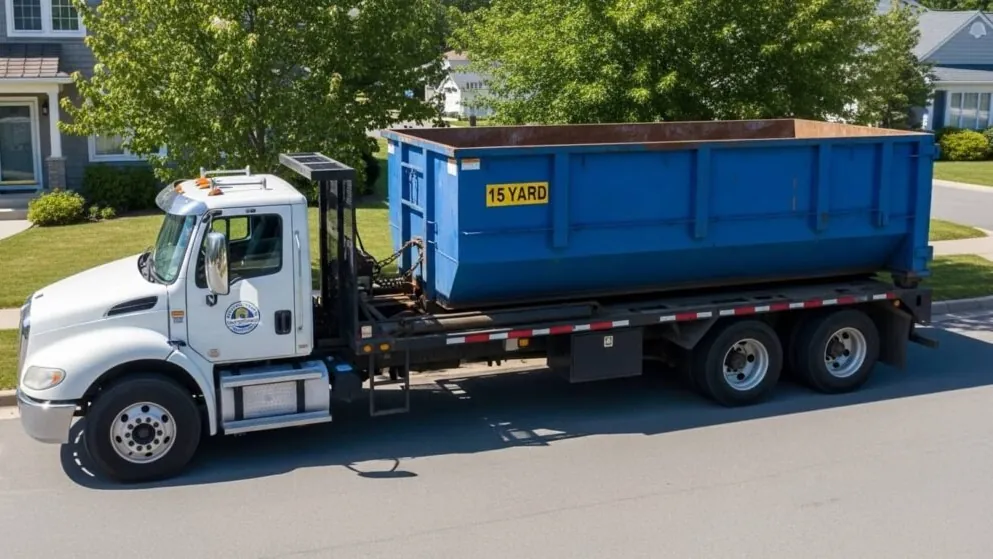
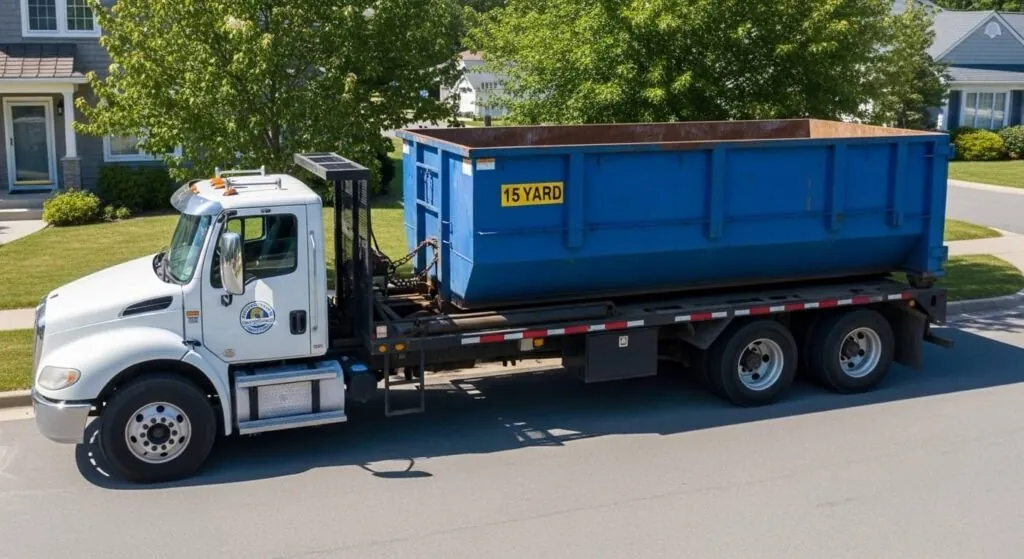
Dumpster Rental Cost in Dothan, AL: Honest Price Guide
An operator's honest breakdown of dumpster pricing in Dothan: what a flat rate should include, which add-on fees to question, and how to pay less.
ReadDothan, AL guide
A straight-talking guide to picking between a 10, 15, 20 or 30 yard roll-off in Dothan, with real dimensions, weight limits and worked job examples.
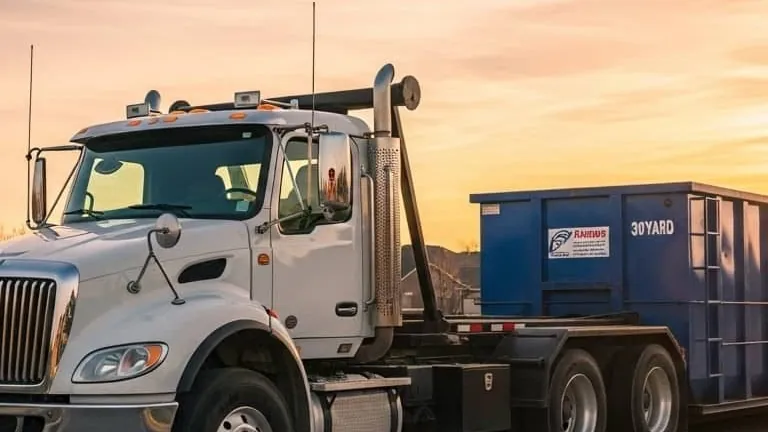
Pick the box too small and you are paying for a second haul you never budgeted for. Pick it too big and you have rented air. Neither mistake ruins a project, but after a decade of setting roll-offs on driveways from Napier Field to Cowarts, sizing is the thing homeowners and contractors get wrong most often. It is also the easiest thing to fix, because it takes about five minutes on the phone before the truck ever leaves the yard.
Start with what a cubic yard actually is: 27 cubic feet, or a cube three feet on every side. Stand a washer and a dryer next to each other and you are looking at roughly one cubic yard of space. A 20 yard dumpster is twenty of those. That sounds enormous until you break down a single bathroom and watch the vanity, tub surround, subfloor and drywall eat half the box before you have touched the tile.
The second number matters just as much, and most people never ask about it. Every roll-off has a weight allowance included in the flat rate, measured in tons at the scale house. Volume and weight are two separate ceilings, and in the Wiregrass, where a rainy week turns red clay into something closer to wet mortar, weight is usually the one you hit first. Below is how the four common sizes compare, what each one holds in real terms, and which one I would put in your driveway.
| Size | Dimensions (L x W x H) | Capacity | Pickup loads | Weight included | Typical job |
|---|---|---|---|---|---|
| 10 yard | 12 ft x 8 ft x 3.5 ft | 10 cubic yards | About 5 | 1 to 2 tons | Small bath remodel, concrete, dirt, single-layer roof |
| 15 yard | 16 ft x 8 ft x 4 ft | 15 cubic yards | About 7 | 2 to 3 tons | Kitchen gut, garage cleanout, deck tear-out |
| 20 yard | 20 ft x 8 ft x 4.5 ft | 20 cubic yards | About 10 | 3 to 4 tons | Whole-floor remodel, two-layer roof, big cleanout |
| 30 yard | 22 ft x 8 ft x 6 ft | 30 cubic yards | About 15 | 4 to 5 tons | Whole-house renovation, new construction, commercial build-out |
The pickup-load column assumes a half-ton bed loaded level with the rails, right at two cubic yards. Nobody loads level, so treat those numbers as generous. The other thing worth noticing is that the 10, 15 and 20 all sit under five feet tall. You can pitch a bag of demo debris over the side without a ladder. The 30 yard roll-off stands six feet at the rail, which is why it belongs on jobs with a loader, a chute, or a crew that does not mind climbing.
Every container leaves here with a tonnage allowance baked into the flat rate. Go past it and the overage is billed by the ton, generally in the sixty to ninety dollar range depending on which transfer station or landfill the load goes to. That is not a penalty we invented. It is the scale ticket, passed through, and we show it to you.
Here is the part that catches people. A 15 yard container holding nothing but sheetrock, carpet, cabinets and old furniture will almost never hit three tons. Fill that same box halfway with broken sidewalk and you are at four tons before it looks full. Volume is what you see. Weight is what you pay for. Our Dothan dumpster rental cost breakdown walks through the full flat-rate math if you want the numbers in front of you.
A hall bathroom or a modest kitchen refresh in one of the older homes off Westgate: tub, vanity, toilet, flooring, cabinets and the plaster-and-lath behind it. A 10 yard handles it if the room is small and you are not taking the ceiling. If it is a full kitchen with appliances and a soffit coming down, step to the 15 yard. Plaster and lath is deceptively heavy, roughly twice the weight of drywall, so on pre-1960 in-town houses I lean toward the smaller box with a lower fill line.
Shingles are pure weight. A square of three-tab runs about 250 pounds; architectural shingles run 350 to 430 pounds a square. On a 25 square ranch with one layer, that is roughly 3.5 tons. Two layers doubles it. For most single-layer residential tear-offs in Houston County a 20 yard is the right call, and for anything heavy I would rather set two 10 yard boxes and swap them than gamble on one overloaded container. Our roofing tear-off sizing guide works through the arithmetic square by square.
Bulky and light. Boxes, holiday decorations, a busted treadmill, lawn furniture, twenty years of paint cans you cannot legally throw away. A two-car garage plus a walk-up attic almost always lands between 15 and 20 yards, and the 20 costs less than a second pull on the 15. If the garage has a workbench, a mower and old fencing stacked along the wall, go 20 and stop thinking about it.
Gutting a three-bedroom down to studs, including flooring, cabinets, fixtures, insulation and interior doors, will fill 30 yards and then some. Most whole-house jobs I run in Rehoboth or Headland use one 30 yard box with a mid-project swap. Keep structural demolition separate from finish-out debris if you can. Mixed loads with old brick or footing concrete in the bottom will blow the tonnage on a box that still looks half empty.
An office or retail space off Ross Clark Circle changing hands: drop ceiling grid, metal stud, old carpet tile, shelving and displays. That is high-volume, low-density debris, exactly what a 30 yard was built for. Ask about scheduled swaps so a full box never sits in customer parking over a weekend.
This is the counterintuitive part. Some debris makes you rent less container, not more.
For any of these, ask about a dedicated heavy debris and concrete container. Those go out with a lower fill line marked on the wall and a rate built around tonnage instead of volume. Sneaking a slab into a general debris box is how people end up with a scale ticket they did not expect. It also helps to know what Alabama allows in a roll-off before you start loading, since tires, paint, batteries and appliances with refrigerant all have separate handling rules under ADEM guidelines.
Length on the ground is not the whole story. Add eight to ten feet past the back of the container for the rear door to swing fully open, because loading through the door beats lifting everything over a four-foot wall. Add roughly sixty feet of straight approach for the truck to back in and winch off, and make sure there is at least 23 feet of clear vertical space with no low limbs, service drops or carport overhang. Live oaks and pecans in older Dothan neighborhoods are the top reason we reposition a box.
Practical footprints: a 10 yard fits a standard two-car driveway with room to still park a vehicle. A 20 yard takes the whole driveway. A 30 yard often needs to go on the yard or the street, which may mean a permit depending on where you are. Summer heat is real here too. Asphalt softens above ninety degrees, so we set plywood or planking under the rails on every asphalt drop. There is more on that in our guide to protecting your driveway during a rental.
The price gap between adjacent sizes is smaller than the cost of a second haul, every time. Moving from a 15 to a 20 typically costs less than a hundred dollars more. A second pull on the 15 means another delivery, another pickup, another disposal fee, and a day or two of your project sitting still while you wait on a truck. The math only reverses when the debris is heavy, because a bigger box does not come with proportionally more tonnage. Light and bulky, size up. Dense and heavy, size down and load smart.
Call and describe the job out loud. Tell us the square footage, the material and where you want it set, and we will tell you which box fits, including when the smaller one is the better deal. Big Joey's Dumpster Rental delivers same day or next day across Dothan, Rehoboth, Taylor, Kinsey, Ashford, Headland, Ozark, Enterprise and the rest of our Wiregrass service area. Flat rate, licensed and insured, driveway-safe placement. Call (334) 336-0388.
Talk to a real person
Call and describe the job. Flat price, stated tonnage, and a delivery time on the same call.
Mon–Sat 7:00am – 6:00pm · Sun by appointment
From this guide
A 10 yard roll-off handles most single bathroom gut jobs, including the tub, vanity, toilet, flooring and drywall. Step up to a 15 yard if you are taking the ceiling down or the house is older with plaster and lath, which weighs roughly twice what modern drywall does. If the bathroom remodel is part of a larger project, size to the whole job instead.
About ten. A standard half-ton pickup bed holds close to two cubic yards loaded level with the rails, so twenty cubic yards works out to roughly ten trips. In practice most people heap their truck beds, so figure eight to ten real loads. Either way, one 20 yard delivery replaces a full weekend of hauling and landfill gate fees.
You are billed for the extra tonnage at the scale rate, generally sixty to ninety dollars per ton depending on the disposal site. We pass through the actual scale ticket rather than charging a flat penalty. Overage almost always comes from concrete, dirt, shingles or rain-soaked debris. Tell us what you are throwing away up front and we will size the box to avoid it.
Weight, not volume. Concrete runs about 4,000 pounds per cubic yard and dirt around 2,500, so a container filled just a third of the way is already at the legal load limit for the truck. A 10 yard box with a marked fill line is the safe, correct choice. Anything heavier and the truck cannot legally leave your driveway.
Plan on the length of the container plus about ten feet for the rear door to swing open, roughly sixty feet of straight approach for the truck, and 23 feet of overhead clearance free of tree limbs and power lines. A 10 yard fits a two-car driveway with room to park. A 30 yard usually needs the yard or street.
Keep reading
An operator's honest breakdown of dumpster pricing in Dothan: what a flat rate should include, which add-on fees to question, and how to pay less.
ReadA straight answer from a Dothan roll-off operator: exactly what goes in an Alabama dumpster, what never does, why, and where to take the rest.
ReadWhether you need a permit for a dumpster in Dothan comes down to where the container sits. The driveway-versus-street rule, plus HOA and county considerations.
Read